What is a Wildfire - and Why is Moorland So Vulnerable? |
With the Easter holiday season bringing thousands of visitors to the Peak District, we explain the science behind moorland wildfires and why the risk is growing. |
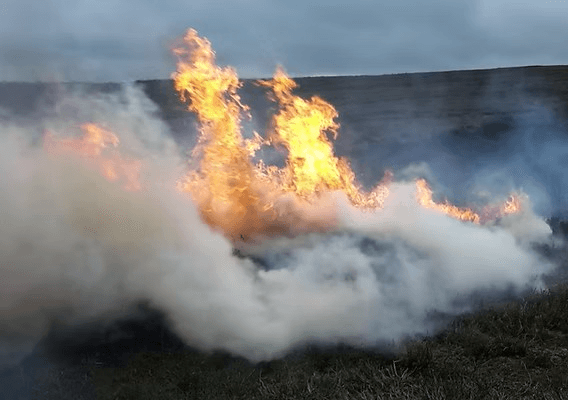
The word "wildfire" conjures images of raging infernos in California or Australia - vast, fast-moving walls of flame consuming forests and homes. But wildfires are not just a distant problem. They are an increasingly serious and growing threat right here in the Peak District, and understanding why requires a look at what makes our moorlands so uniquely vulnerable.
What is a Wildfire?
A wildfire is any uncontrolled fire that burns in vegetation - whether that is grassland, heathland, scrub, or forest. In the UK, the most common type of wildfire on upland areas like the Peak District is a peat fire, which burns not just the surface vegetation but the deep layers of compressed organic matter - peat - that lie beneath it.
Peat is essentially ancient, partially decomposed plant material that has accumulated over thousands of years in waterlogged conditions. In the Peak District, peat deposits can be several metres deep and may represent thousands of years of accumulated growth. When peat burns, it does not just burn on the surface - it can smoulder underground for days, weeks, or even months, making it extraordinarily difficult to extinguish.
Why is Moorland So Vulnerable?
Healthy, waterlogged peat is actually quite resistant to fire - its high moisture content acts as a natural firebreak. The problem arises when peat becomes degraded and dries out. Decades of industrial pollution, overgrazing, drainage, and climate change have left large areas of Peak District moorland in a degraded state, with dry, exposed peat that provides ideal fuel for deep, long-burning fires.
Climate change is making the situation worse. Warmer springs, longer dry spells, and more intense rainfall events are all contributing to conditions that increase wildfire risk. The Peak District has experienced more than 30 moorland fires since March 2025 alone.
What Causes Wildfires on the Moors?
The causes range from deliberate arson to accidental ignition. The most common accidental causes include:
1. Disposable barbecues — which remain hot long after the food is cooked and can ignite dry vegetation if placed on or near the ground
2. Campfires — a single stray ember carried by the wind can travel significant distances and ignite dry peat
3. Discarded cigarettes
4.Glass bottles — which can act as a lens, focusing sunlight onto dry vegetation.
All of these are preventable. All open fires and barbecues, including disposable barbecues, are strictly prohibited throughout the Peak District National Park.
What Can You Do?
The rules are simple: no fires, no barbecues, no disposable grills. If you want a hot meal on the moors, use a camping stove with care, away from dry vegetation. If you see smoke or flames, call 999 immediately and ask for the fire service. Provide your location using What3Words or a grid reference.
The BMC's Wildfire Appeal is also raising funds to restore degraded peatland and fund ranger patrols. Every £25 donated fully restores one square metre of moorland. Donate at thebmc.co.uk.
|
0 Comments
Join the conversation
Be the first to comment
Share your thoughts above.