£6 Million Green Light for 'Mini Switzerland' Transport Plan in the Hope Valley |
A landmark funding announcement could transform how residents and visitors travel through the Peak District, without building a single new railway line. |
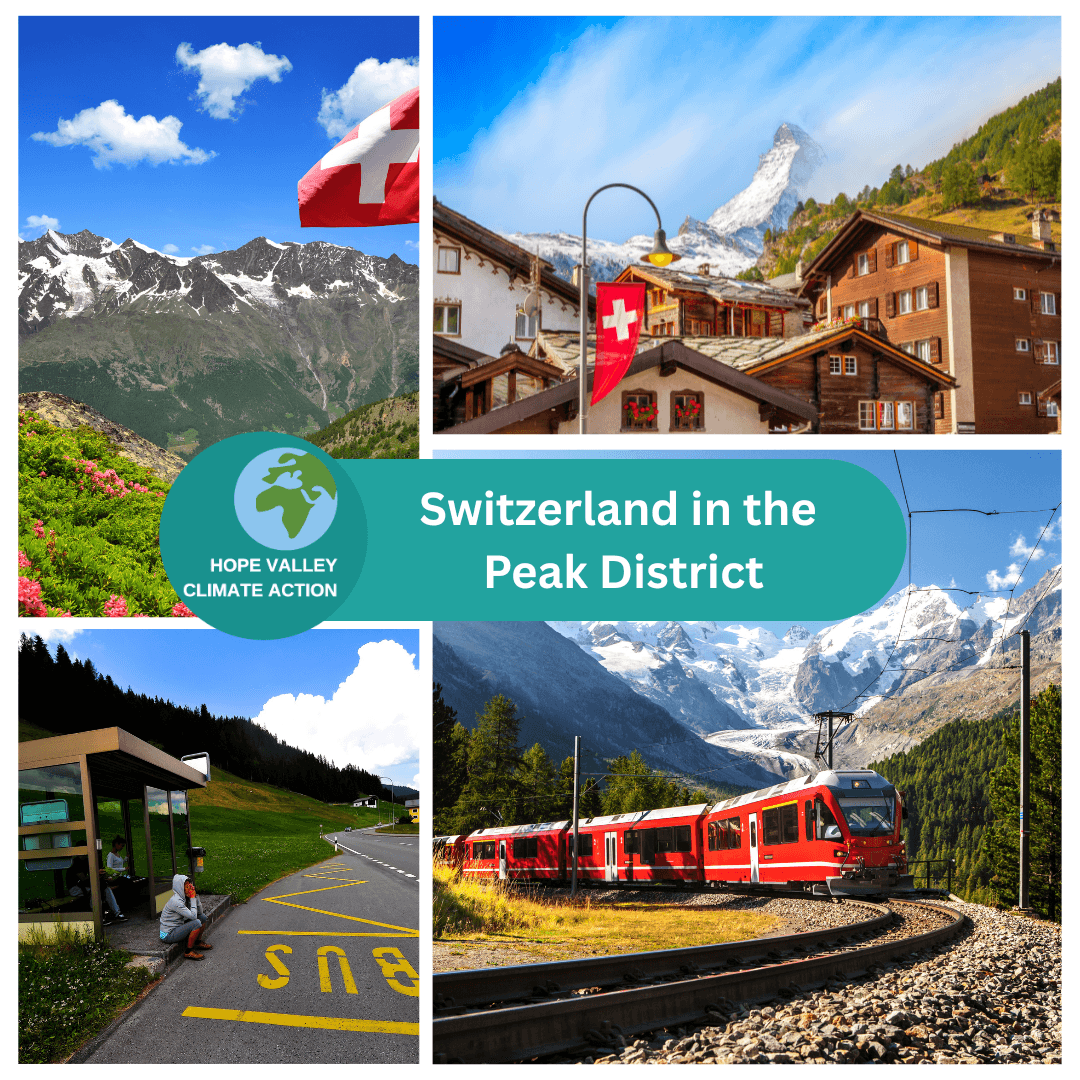
A community-led project to create a "Mini Switzerland" style public transport network in the Hope Valley has secured £6 million in government funding, in what campaigners are calling a landmark moment for rural transport in the UK.
The Department for Transport confirmed the funding allocation on 2 April 2026, with the East Midlands Combined County Authority (EMCCA), led by Mayor Claire Ward, named as the accountable body for delivery. Additional funding will come from EMCCA's Transport for City Regions settlement.
What is Mini Switzerland?
The concept takes its inspiration from the Swiss rural public transport system, widely regarded as the gold standard for integrated, affordable, clockwork-reliable travel. In Switzerland, buses connect to trains, tickets work across all operators, and the entire network functions as a single joined-up system. The aim of the Hope Valley project is to demonstrate that the same principles can work in rural Britain.
Under the plans, buses will be timed to connect with trains on the Hope Valley railway line. Tickets will work seamlessly across bus and rail operators. Services will run on a regular "clock face" timetable,
meaning passengers will always know that a bus or train is coming at a predictable time, without needing to consult a timetable.
Crucially, the project does not depend on new railways or major construction. Instead, it delivers change through better coordination: improved services, modest infrastructure upgrades, clearer information, and simple integrated ticketing.
Why the Hope Valley?
The Hope Valley has been chosen as the national demonstrator location because it reflects many of the challenges facing rural Britain: scattered villages, popular visitor destinations, existing but poorly connected bus and rail services, and high levels of car use.
The Hope Valley railway line connects Manchester and Sheffield - two cities where approximately one third of households have no access to a car. Improved connections will give those residents direct, easy access to the Peak District National Park for the first time.
Thomas Ableman, founder of Freewheeling and creator of the Mini Switzerland concept, said: "For years we've been stuck in a cycle where rural public transport costs more and delivers less. Mini Switzerland shows there's another way. By properly integrating buses and trains, we can unlock far more value."
Roger Clarke, Trustee at Hope Valley Climate Action - the community group that has championed the project added: "For people in the Hope Valley, this is about being able to get to work, to school, to shops and to healthcare without always needing a car. It's also about managing visitor traffic in a way that protects our villages and landscape."
What Happens Next?
Passengers could begin to see the first meaningful improvements before the end of 2026. The project is designed as a five-year learning programme, generating real-world evidence on how integrated rural transport networks affect ridership, costs, and travel behaviour. If successful, the model will be made available for other rural areas across the UK to adopt.
|
0 Comments
Join the conversation
Be the first to comment
Share your thoughts above.